
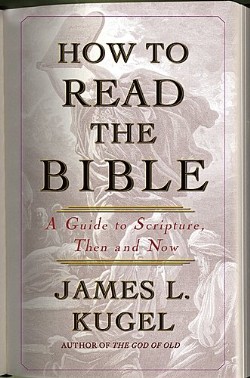
How To Read The Bible
$25.00
Scholars from different fields have joined forces to reexamine every aspect of the Hebrew Bible. Their research, carried out in universities and seminaries in Europe and America, has revolutionized our understanding of almost every chapter and verse. But have they killed the Bible in the process?
In How to Read the Bible, Harvard professor James Kugel leads the reader chapter by chapter through the “quiet revolution” of recent biblical scholarship, showing time and again how radically the interpretations of today’s researchers differ from what people have always thought. The story of Adam and Eve, it turns out, was not originally about the “Fall of Man,” but about the move from a primitive, hunter-gatherer society to a settled, agricultural one. As for the stories of Cain and Abel, Abraham and Sarah, and Jacob and Esau, these narratives were not, at their origin, about individual people at all but, rather, explanations of some feature of Israelite society as it existed centuries after these figures were said to have lived. Dinah was never raped — her story was created by an editor to solve a certain problem in Genesis. In the earliest version of the Exodus story, Moses probably did not divide the Red Sea in half; instead, the Egyptians perished in a storm at sea. Whatever the original Ten Commandments might have been, scholars are quite sure they were different from the ones we have today. What’s more, the people long supposed to have written various books of the Bible were not, in the current consensus, their real authors: David did not write the Psalms, Solomon did not write Proverbs or Ecclesiastes; indeed, there is scarcely a book in the Bible that is not the product of different, anonymous authors and editors working in different periods.
Such findings pose a serious problem for adherents of traditional, Bible-based faiths. Hiding from the discoveries of modern scholars seems dishonest, but accepting them means undermining much of the Bible’s reliability and authority as the word of God. What to do? In his search for a solution, Kugel leads the reader back to a group of ancient biblical interpreters who flourished at the end of the biblical period. Far from naive, these interpreters consciously set out to depart from the original meaning of the Bible’s various stories, laws, and prophecies — and they, Kugel argues, hold the key to solving the dilemma of reading the Bible today.
How to Read the Bible is, quite simply, the best, most origin
in stock within 3-5 days of online purchase
SKU (ISBN): 9780743235877
ISBN10: 0743235878
James Kugel
Binding: Trade Paper
Published: October 2008
Publisher: Simon And Schuster
Related products
-

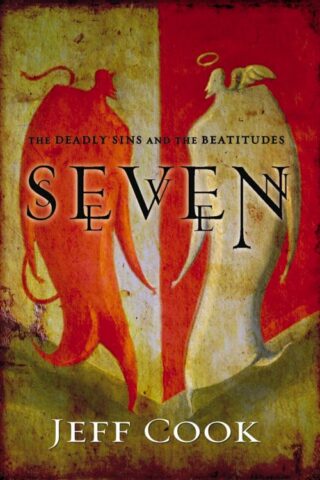
7 : The Deadly Sins And The Beatitudes
$18.99The space between Heaven and Hell, C. S. Lewis said, is the great divorce. The Beatitudes and Deadly Sins are the divergent landscapes and are the signatures of a world redeemed and a world decomposing. This book engages these two spheres and listens for what they say to one another.
Add to cart3 in stock (additional units can be purchased)
-
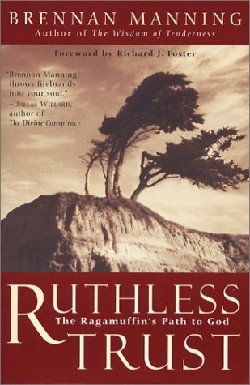
Ruthless Trust : The Ragamuffins Path To God
$14.99We are made for the love of God, and nothing less will ever satisfy us. In his acclaimed bestseller, The Ragamuffin Gospel, Brennan Manning showed us the powerful truth that the divine gifts of love is ever present for us regardless of the state of our lives. Now in this challenging sequel, he turns to our primary obstacle to living fully within this divine love — the lack of “ruthless trust.”
Through rich stories and deep insights, Manning shows us how true and radical trust can transform everything in our lives. No matter where we are on our path of discipleship, he offers encouragement to shed the limitations of fear, shame, and doubt through complete reliance upon God. The way of Ruthless Trust is not an abstract theory; it is that very practical and demanding path that each of us must follow in response to God’s love.
Add to cart1 in stock (additional units can be purchased)
-
Find Your People Curriculum Kit
$73.99Never in the history of civilization have we been more connected and felt more alone. We are all so lonely. What if fundamentally the ways we have set up our lives is broken? We’ve withdrawn rather than moved through it. We want supper clubs and friends, instead of war partners. We have a wrong view of community.
This 7-session video Bible study begins with a look at the original community in Genesis, the Trinity, and the creation of people to see what God had planned for us all along. We will also discover throughout the study the five life patterns required to build deep, connected relationships:
*Proximity
*Shared Mission
*Transparency
*Accountability
*ConsistencyThe seven sessions include:
*Week 1: Introduction / God’s Plan It is not good for man to be alone. (Creation)
*Week 2: Shame / The Disruption of Community Then the eyes of both were opened, and they knew that they were naked. (Shame)
*Week 3: Sitting Around the Fire / Proximity I will make My dwelling among you. (God’s Presence)
*Week 4: Working Together / Shared Mission Each of you should use whatever gift you have received to serve others. (Jesus and the Disciples)
*Week 5: Open Doors / Transparency And all who believed were together and had all things in common. (Acts)
*Week 6: Tribal Elders / Accountability Be kind to one another, tenderhearted, forgiving one another, as God in Christ forgave you. (The Church Grows)
*Week 7: Meals Together / Consistency Your love for one another will prove to the world that you are my disciples. (The Kingdom of God / New Heavens)
The curriculum kit contains one each of:
*Find Your People Study Guide plus Streaming Video
*Find Your People Video Study
*Find Your People Conversation Card DeckAdd to cart1 in stock



Reviews
There are no reviews yet.