

Emerald Windows
$17.99
Brooke Martin is a stained-glass artist who fled her hometown of Hayden, Louisiana, ten years ago after a scandal in which, as a high-school student, she was wrongly accused of having an affair with her twenty-one-year-old art teacher, Nick Marcello, who was fired as a result of the gossip. Now, as a struggling artist, she accepts a commission to return to Hayden to redesign the stained-glass windows in the city’s historic church only to find that the person who hired her was in fact Nick Marcello. Nick is now a Christian, but that doesn’t stop the gossip from starting all over again once Brooke returns, sparked by Abby Hemphill, a trustee of the church. Brooke’s family is greatly bothered by the gossip, especially her younger sister Roxy, now in high school, who has problems of her own and is in fact, as Brooke discovers to her dismay, somehow involved with a mystery married man, Bill. Despite the hypocrisy of many of the church members, Brooke begins to see the mystery of God’s relationship with man as she designs the window panels. When Brooke comes to a point of surrender to God, she and Nick confess to each other that, although they didn’t act on their feelings for each other years ago, those feelings were nevertheless there, contributing to the feelings of guilt they’ve suffered all these years. They kiss. Meanwhile, Abby Hemphill is finally successful in convincing the church trustees to freeze all funds for the window renovation. Nick and Brooke offer to continue the work for free. In a Gift of the Magi touch, Nick and Brooke, unbeknownst to each other, each sell something of great value to finance the work. Brooke discovers that Roxy’s married man, Bill, is Bill Hemphill, Abby’s son. He has been pursuing Roxy for months through threats and intimidation, but in fact Roxy has not given in to him yet. Brooke tells Bill and Abby she will go to the press with the whole story unless it stops now. As the book ends, Brooke and Nick are engaged and church members raise enough money to reimburse them for their expenses and labor in finishing the church windows.
in stock within 3-5 days of online purchase
SKU (ISBN): 9780310228073
ISBN10: 0310228077
Terri Blackstock
Binding: Trade Paper
Published: October 2001
Publisher: Zondervan
Print On Demand Product
Related products
-

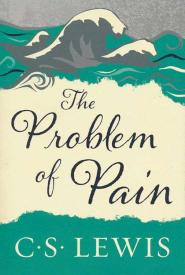
Problem Of Pain
$17.99For centuries Christians have been tormented by one question above all — If God is good and all-powerful, why does he allow his creatures to suffer pain? C. S. Lewis sets out to disentangle this knotty issue but wisely adds that in the end no intellectual solution can dispense with the necessity for patience and courage.
Add to cart1 in stock (additional units can be purchased)
-
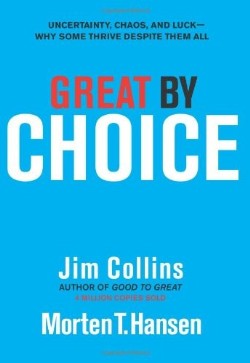
Great By Choice
$29.99The new question
Ten years after the worldwide bestseller Good to Great, Jim Collins returns with another groundbreaking work, this time to ask: Why do some companies thrive in uncertainty, even chaos, and others do not? Based on nine years of research, buttressed by rigorous analysis and infused with engaging stories, Collins and his colleague, Morten Hansen, enumerate the principles for building a truly great enterprise in unpredictable, tumultuous, and fast-moving times.The new study
Great by Choice distinguishes itself from Collins’s prior work by its focus not just on performance, but also on the type of unstable environments faced by leaders today.With a team of more than twenty researchers, Collins and Hansen studied companies that rose to greatness-beating their industry indexes by a minimum of ten times over fifteen years-in environments characterized by big forces and rapid shifts that leaders could not predict or control. The research team then contrasted these “10X companies” to a carefully selected set of comparison companies that failed to achieve greatness in similarly extreme environments.
The new findings
The study results were full of provocative surprises. Such as:The best leaders were not more risk taking, more visionary, and more creative than the comparisons; they were more disciplined, more empirical, and more paranoid.
Innovation by itself turns out not to be the trump card in a chaotic and uncertain world; more important is the ability to scale innovation, to blend creativity with discipline.
Following the belief that leading in a “fast world” always requires “fast decisions” and “fast action” is a good way to get killed.
The great companies changed less in reaction to a radically changing world than the comparison companies.
The authors challenge conventional wisdom with thought-provoking, sticky, and supremely practical concepts. They include: 10Xers; the 20 Mile March; Fire Bullets, Then Cannonballs; Leading above the Death Line; Zoom Out, Then Zoom In; and the SMaC Recipe.Finally, in the last chapter, Collins and Hansen present their most provocative and original analysis: defining, quantifying, and studying the role of luck. The great companies and the leaders who built them were not luckier than the comparisons, but they did get a higher Return on Luck.
This book is classic Collins: contrarian, data-driven, and uplifting. He and Hansen show convincingly that, even in a chaotic and uncer
Add to cart1 in stock




Reviews
There are no reviews yet.